Old Oak : Sustainable harvesting and utilisation of oak for construction
Joe Thompson
There is much to learn from the past to help illustrate, inform and guide us in the present and into the future. One example is the construction of durable and sustainable traditional timber-framed buildings that far outlast the time taken to grow the initial trees. The South and East of England can provide thousands of historic examples. It requires a different perspective though, towards the growing, harvesting, conversion and use of timber, from that in general use today. Generally, the current commercial method in Northern European countries is based on clear felling even-age plantations providing logs that are squared up and transported hundreds of miles to the building site.
Over fifty years ago the evidence that this modern method was not entirely based on historic practice was proposed by Professor Oliver Rackham. In his 1972 paper in Vernacular Architecture – “Grundle House; on the quantities of timber in certain East Anglian Buildings in relation to local supplies” he compellingly argued that historic timber-frame structures – can be seen as a large dataset containing a wealth of evidence. His primary interest was the history of woods and their management, and he demonstrated that historic timber-frames were a way to gather observations and interpretations on the “historic managed woodscape” that provided these construction resources.
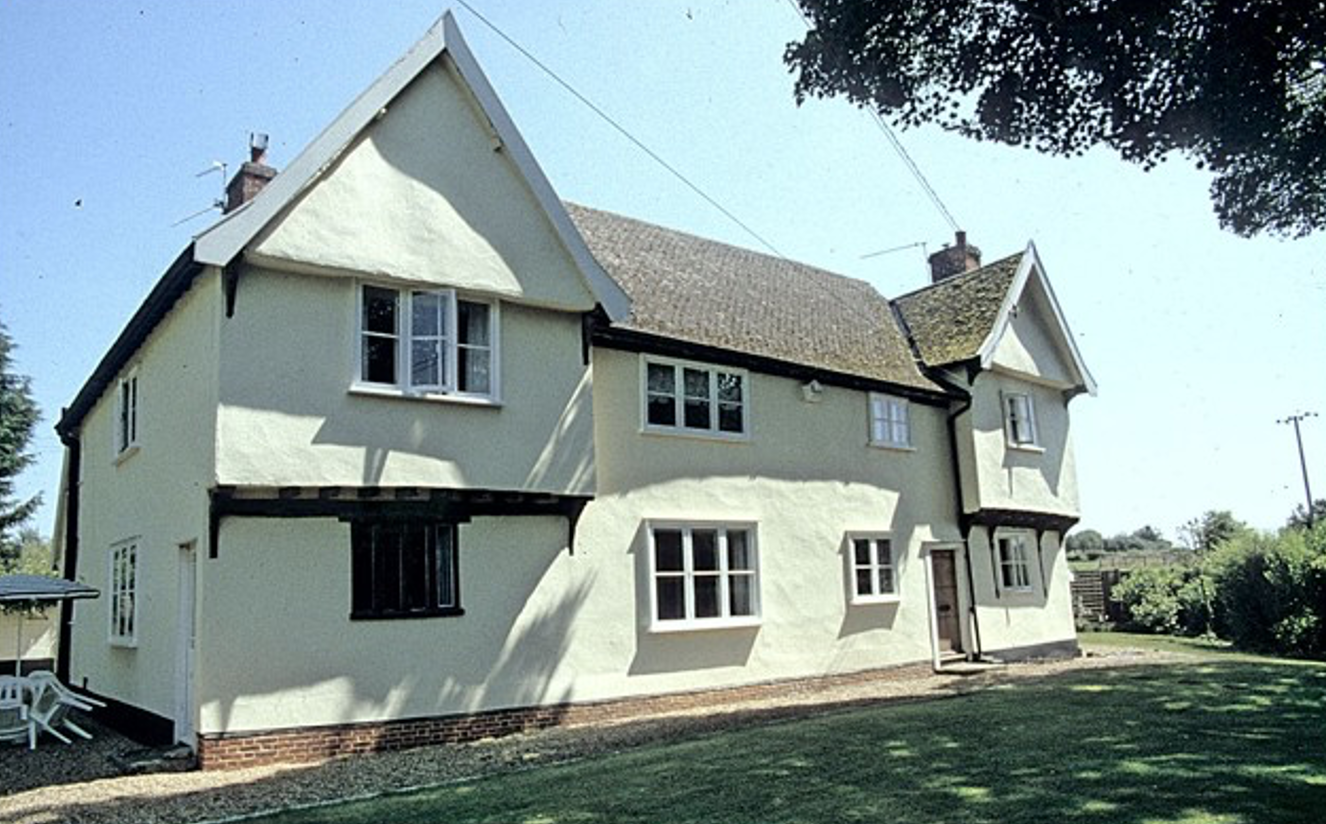
One of the earliest buildings he systematically studied was Grundle House, in Stanton, Suffolk, which is a large, seven bay, hall house with two cross wings dating from the late fifteenth century and was substantially complete with clear evidence for any missing timbers..
For his investigation and informed by the study of historic documentation relating to managed and often coppiced woodlands in East Anglia, he assumed that:
All the trees were local,
All the timbers were new (not second-hand)
They all came from woods (not hedges, fields or parks)
They were all oak (not ash or elm).
His results showed that it contained about 730 timbers, with a volume of about 34.9m³ (1,230 ft³), fixed with about 1,250 joints. He then used these figures to calculate the number of trees needed to fabricate Grundle House. To do this he divided the trees into five size classes (0 to 4), according to their basal diameter (under bark), the cross-sectional area of the class doubling each time, creating a numerical series which relates the squared-up timbers by the ratio of √2. In terms of their length as “Medieval oaks tended to be short as well as small” he took a useable log to fall between 4 and 6m (13 to 20 feet). The multitude of branches forming the crown of the tree being cut off and not used for building. This is sometimes described in mediæval accounts as “Loppium et chippium” and often paid for the felling and in some cases even the haulage of the logs out of the woodland. His estimate was that about 333 trees were used to frame up Grundle House.
Woodland managed by coppicing has historically produced two crops, “wood” and “timber.” “Wood” refers to a wide range of species with a maximum diameter of between 150 to 200mm (6” – 8”) or a circumference of 450 to 600mm (18” – 24”); definitions varying over time and region. This is often written in the historic documents as “Boscus, subboscus, virgultis informibus, underwood or spring.” and wasfor primarily for fuel, fencing and temporary constructions. This was the more important of the two crops and was gathered under tenants’ rights, often with conditions. “Timber” refers to three specific species with a minimum diameter of 450 to 600mm (6” – 8”) or a circumference of 450 to 600mm (18”- 24”) or a minimum quarter girth of 150mm (6”); definitions again varying over time and area. The terms “Memerium” or timber denoting theselarger trees of oak, ash & elm suitable for building with, and were often subject to payment to the Lord of the Manor.
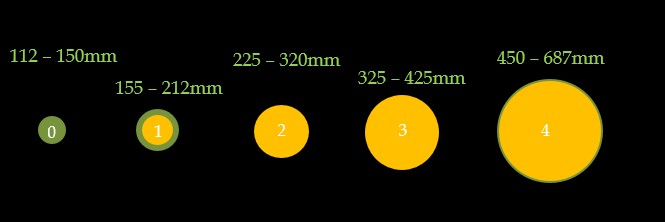
A significant finding from Grundle House being that about half the trees were under 225mm (9”) basal diameter. Today this size of oak log and larger tends to be almost always processed into firewood, not converted into construction stuff. Interestingly, his class 4 size is now often taken as the smallest acceptable diameter for oak beams, by larger sawmills.
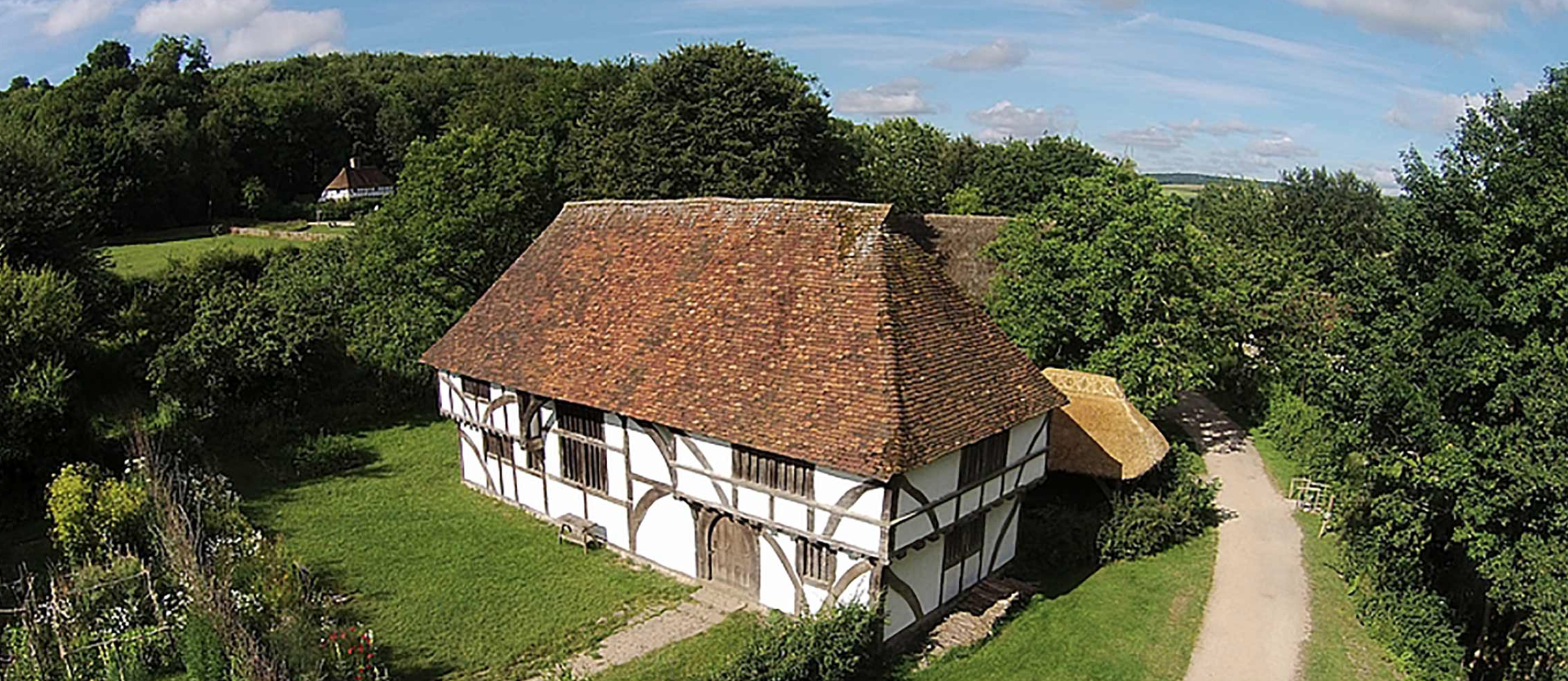
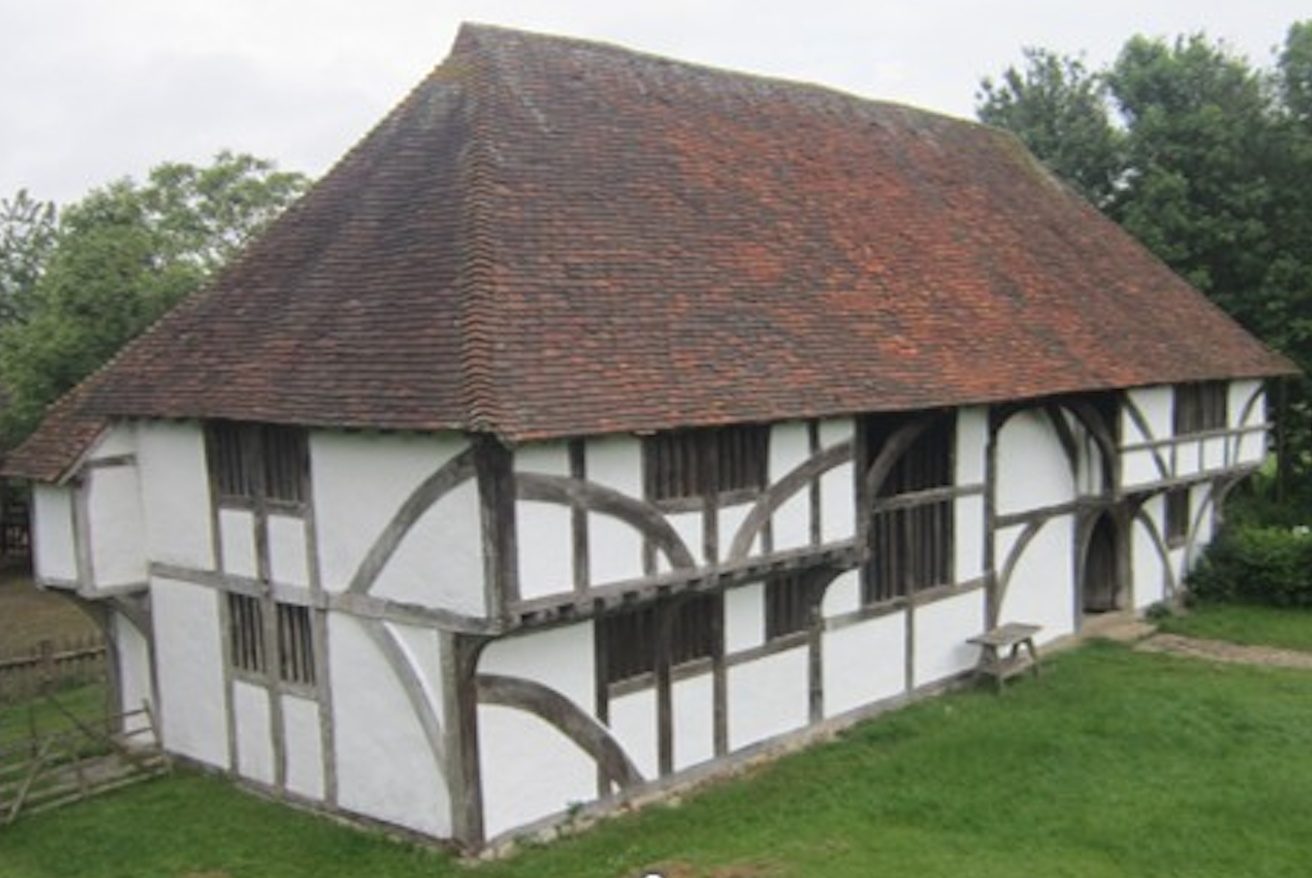
I then applied the same methodology to Bayleaf Farmhouse, a large, five bay, oak-framed house with an open hall and two jettied chambers with an inline roof, known as a “Wealden”. It dates from the fifteenth century; now at the Weald and Downland Museum, but originally from Chiddingstone in Kent. It has been reconstructed to its arrangement in the early sixteenth century. Bayleaf is one of about 800 or so “Wealdens” surviving in the country. Roughly half of these are found in Kent, mainly in rural locations (as Bayleaf was – this type being formerly known as a “Kentish Yeoman’s house”), with a further quarter in East Sussex tending to be in villages, with the remainder scattered around England, often as prominent urban buildings.
The first task was to sketch out the various frames that make up the building; in this case there are two plan, five longitudinal and six transverse frames, making a total of thirteen. This enables every timber to be given a label and counted as either a Great (primary timber found in two abutting frames) or Small (secondary timber found only within that specific frame) timber. Then the site observations and measurements take place, noting not only dimensions but also if the timber is either a boxed heart (whole log), half or a quarter, etc. This data is then entered onto a spreadsheet and organised into Professor Rackham’s class sizes. Where the timber is less than the log length of 14 – 20 feet then two or more timbers are combined to fall into this range, similarly for halved and quartered timbers. My results for Bayleaf are that it contains about 486 timbers, with a volume of about 31.7m³ (1,100 ft³), requiring about 22 loads (of 1.41m³ each), weighing about 30 tonnes and fixed with about 830 joints.
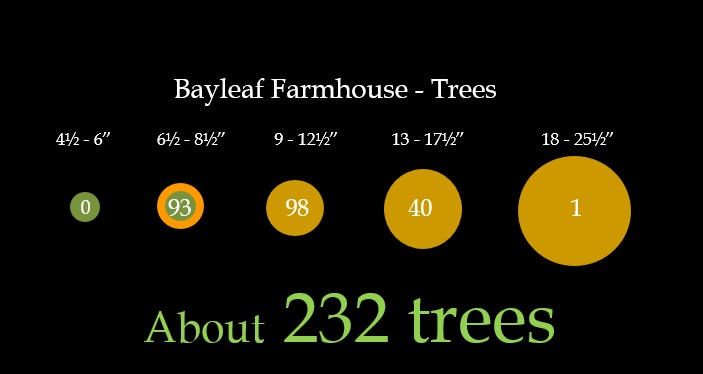
The number of trees of each size class in Bayleaf, as reconstructed at the Museum.
There are none of the smallest Class 0 in Bayleaf, but there are significant numbers of Class 1 – mainly rafters (Quercus de cheverons), and Class 2 – mainly joists and studs. Class 3 are the Great timbers, such as posts, plates, and beams (this size was sometimes known in medieval times as Bletrones). The largest and only Class 4 log supplying the moulded arch braces in the open hall (for the rebuild in 1971, these two planks came from Henry Venables, Staffs, timber merchants).
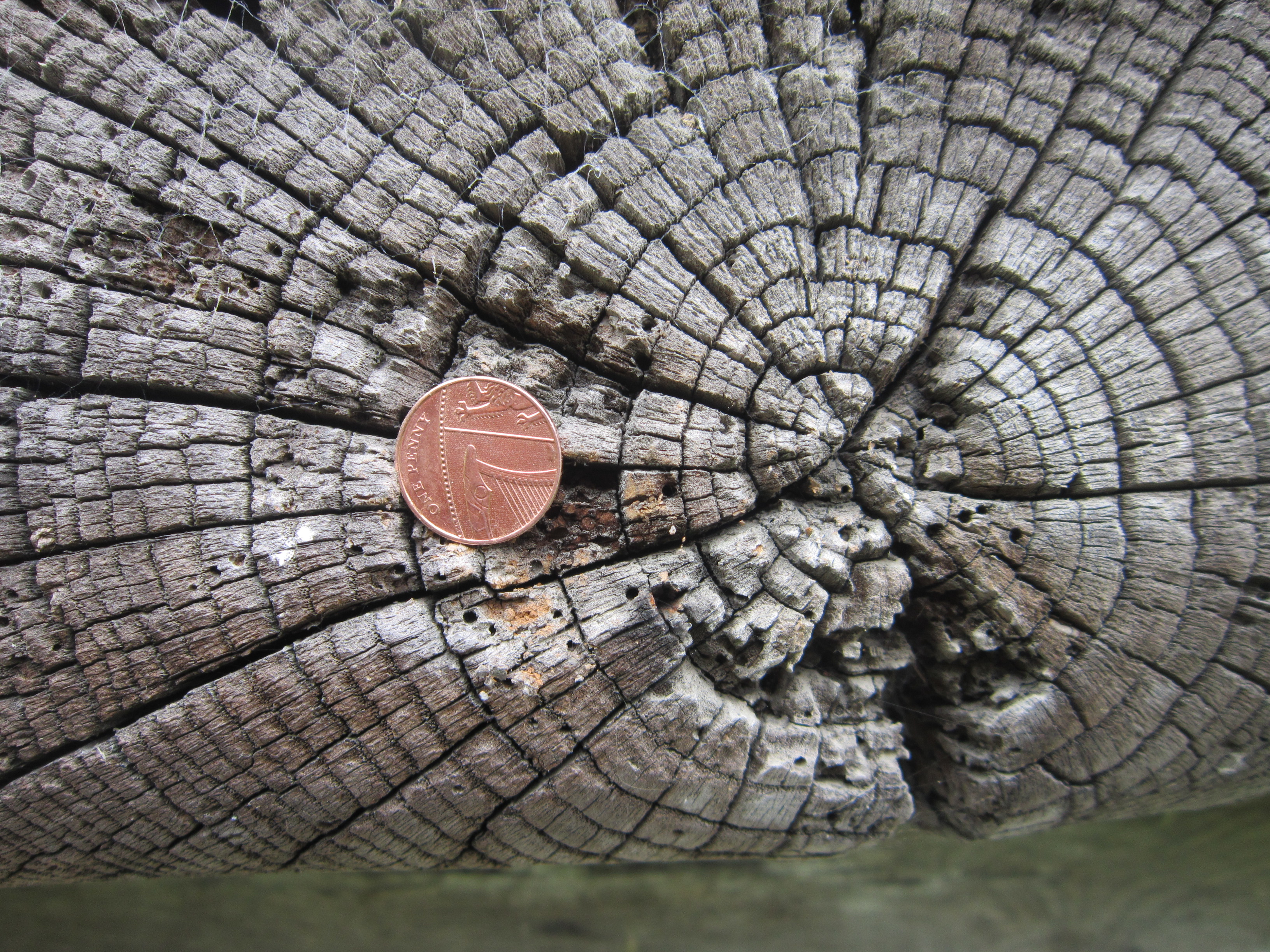
If you look at the end grain of the jetty joists, you can see that many of them were fast grown with growth rings of about 6mm in width. This equates to a circumferential increase of 36mm per annum. If all the timber grew at 36mm girth per annum which is indicative of regrowth from existing root stock, (stored coppice) it could all be grown in 55 to 80 years.
The takeaway from this is that by growing oak from coppice stumps the woodsman significantly increase the rate of growth compared to a new planting. Faster grown oak is also denser, and this generally equates to a stronger timber. Coppicing also implies less branching low down on the stem, due to the adjacent underwood shading out light close to the ground. Branches manifest as knots in converted timber and knots generally reduce strength, another advantage in favour of using smaller diameter, fast grown oak. However, harvesting timber of this size and relatively young age means that modern visual strength grading standards would require revision to take account of the relative lack of straightness of these oaks, compared to that produced from sawing a larger diameter tree (with potentially larger branches/knots) into smaller fractions. Smaller diameter trees are also lighter and easier to move. This historic system then enabled woodlands to be managed efficiently to produce two crops, both cut and come again, but on different rotations of 5 to 10 years and about 50 to 100 years.
Aesthetically pleasing as these historic timber-frames can be, they rely on panel infilling to help keep the weather out and heat in. Here modern ideas about draught-proofing and heat insulation by over-cladding the frame and avoiding the multitude of small gaps between frame and panel have proven very adventitious. The reduction in air changes per hour has significantly improved the comfort factors within the building but still relies on user knowledge to allow the system to perform healthily and effectively.
Once the timber is no longer directly exposed to the weather and straightness of stem is less of an issue then a wider range of temperate hardwoods can be used for the structural frame. Species such as Sweet Chestnut, Elm, Beech and Ash harvested at diameters less than 300mm could be used. Additionally new thermal modification techniques can allow non-durable timbers such as Beech and Ash to be converted into products such as durable weather-boards so increasing the use of local resources and reducing the use of toxic chemical preservatives. Additionally there are a new generation of structural timber fixings available as well as the potential to use lignin derived adhesives to increase the palette of connection details.
By combining historic practices with new ideas to meet modern expectations we could begin to manage, harvest and utilise our local woodlands in a more sustainable way and provide comfortable and more environmentally friendly structures. This though will require greater understanding of the features and benefits by designers, specifiers, constructors, insurers and purchasers. Whilst this would represent only a small part of the country’s construction needs it would highlight the potential of homegrown woodlands and the wide range of potential forest products that they can produce.
There are parallels with the worlds of “slow food”, “food miles” and “eat food, not too much, mostly plants” in the concepts of using locally sourced structural timbers in a relatively unprocessed form without chemical preservative treatment. There are essentially tried and tested approaches that can provide strong, durable and useful structures using a wide range of timber sizes and grades. At present the rise of the woodchipper and wood splitter is rendering these many of these trees into thousands of small pieces that obliterate the constructional and carbon storing potential that nature has provided for us. This seems like a needless waste but the financial incentives to follow this path are strong and new policies, guidance and principals are needed to review and stimulate a more holistic and integrated use of small local woodlands. The resources and opportunities are there but it will require some pioneers to develop some new healthy recipes using a mixture of established and new materials. Bon appetite!
Further
Bayleaf House is one of the centrepiece reconstructed buildings at the Weald & Downland Museum.