Marcus Badman – Returning to nature
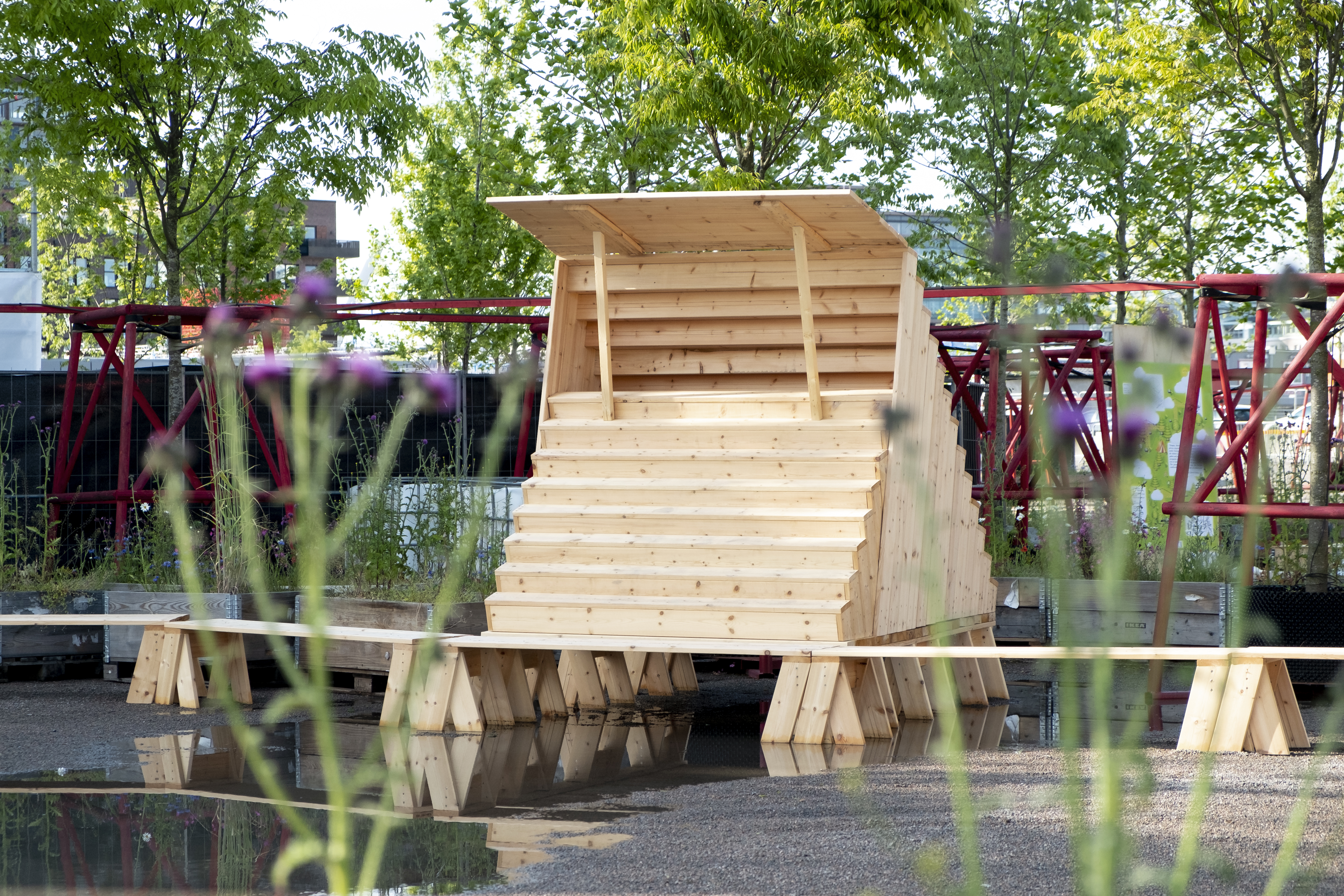
Returning to Nature is a project about the ongoing distancing between humans and nature. A project about understanding our roots and about deepening our relationship with nature. After three hundred years of industrialisation and growth, we have become products of our time. We´ve gone from participants to dominators.
Each year, humans extract 60-100 billion tons of material from the Earth. We now control 75% of all ice-free land because of industrialisation, agriculture and urban growth. Eighty-five per cent of the Earth’s forests have been cleared for human use (with forests being home to 80% of all terrestrial biodiversity). A common definition of nature is that it is something untouched by humans. If you go by that definition, nature does not exist anymore. We now live in a post-nature world, where our impact affects all-natural processes and systems. We treat nature as endless capital from which we can harvest endless resources. If our reckless behaviour doesn´t stop, we will not have an Earth on which future generations can live. We must reunite with our surroundings to find a mutually prosperous future and relationship. If we can find the connection to our own nature, I think that we can create respect and awareness, and become reunited. To do so, I have created a ritual of returning to nature. An experience-based concept for dwelling and walking in nature. The ritual consists of three parts: the walking path, the elevated walking path, and the dwelling. They are all constructed with the same dimensions of standard timber, in order to be easily built and cost-efficient.
Returning to Nature is a project about the ongoing distancing between humans and nature. A project about understanding our roots and about deepening our relationship with nature. After three hundred years of industrialisation and growth, we have become products of our time. We´ve gone from participants to dominators.
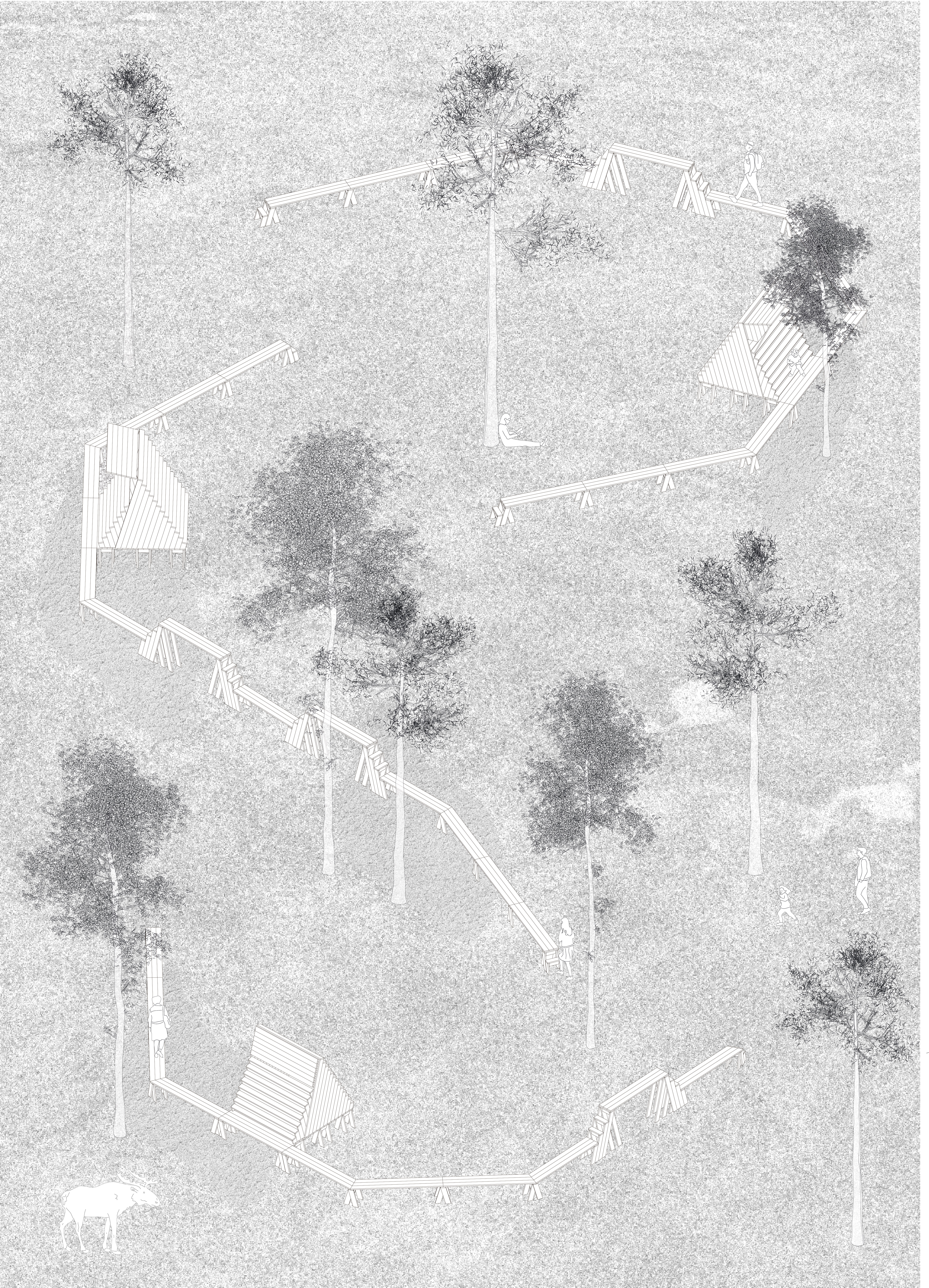
Each year, humans extract 60-100 billion tons of material from the Earth. We now control 75% of all ice-free land because of industrialisation, agriculture and urban growth. Eighty-five per cent of the Earth’s forests have been cleared for human use (with forests being home to 80% of all terrestrial biodiversity). A common definition of nature is that it is something untouched by humans. If you go by that definition, nature does not exist anymore. We now live in a post-nature world, where our impact affects all-natural processes and systems. We treat nature as endless capital from which we can harvest endless resources. If our reckless behaviour doesn´t stop, we will not have an Earth on which future generations can live. We must reunite with our surroundings to find a mutually prosperous future and relationship. If we can find the connection to our own nature, I think that we can create respect and awareness, and become reunited. To do so, I have created a ritual of returning to nature. An experience-based concept for dwelling and walking in nature. The ritual consists of three parts: the walking path, the elevated walking path, and the dwelling. They are all constructed with the same dimensions of standard timber, in order to be easily built and cost-efficient.
When taking the steps up on the walking path, and by placing yourself in nature from a levelled perspective, you will experience it in a different and unexpected way. Focus is drawn away from where you place your feet and other senses become more awake. You will notice new details and experience them in new ways. You become naked toward your impressions and your thoughts can drift away. If you look at the painting “Olympia”, painted in 1863 by Edouard Manet, you see Olympia lying in bed almost entirely naked, apart from her necklace. The necklace in fact makes her seem even more nude. My intention with the walking path is to create the same heightened effect as Manet does with nakedness, but with nature.
As you follow the walking path into nature, you reach the next part of the ritual. This is a set of steps that takes you even higher above ground. To climb the stairs, your focus is drawn back towards where you place your feet. You temporarily lose connection with your surroundings. Upon reaching the top, and the even more elevated path, there is an even wider perspective. New details become visible: the ground looks different, perhaps you can reach some branches of a tree. You walk here for a bit until you climb down. Where, soon, you´ll reach the third and final part of the ritual: the dwelling.
The dwelling is both a structure for sleeping and a tool for deep listening to nature. When you climb into the structure and close the hatch, you will be resting in almost complete darkness. Visual preferences become lost and the importance of hearing increases. Like sleeping in a tent as a child, the environment outside grows larger. Even the lowest sounds sound loud and your mind starts to wander away. Here, you rest in the womb of nature. After spending the night, or perhaps ten minutes, you climb out. You walk the final path and take the steps down to the ground. You are now reconnected with nature.
The dwelling, the walking path and the elevated walking path are all constructed with the same design logic. They are all based on pieces of angled timber which lock from one into the next. In the dwelling, these are stacked and shift in height, just as they do in the elevated walking path. This is a very simple way of building, and I was initially inspired by a pinecone’s organisation of sprouts.
The different parts of the ritual can be combined in a variety of ways. You can build a long or a short path. You can use the elevated path as stairs to orient through the terrain. You can use one or several dwellings, depending on what suits you and your local terrain best. The ritual is not a solution to the escalating issue of distancing to nature. It’s more of an intervention and a start of something new. It is based on the premise that, to find a mutually prosperous relationship with nature, we must recognise it as ourselves. That we must look back, in order to move forward.
Further
Marcus Badman – www.marcusbadman.cargo.site/