
More no longer a bore: a furniture designer’s decorative urge turns the tables on Nordic minimalism
Gothenburg’s furniture designer SLOYDLAB has embraced the decorative and reconnected with the Swedish Folk Arts tradition in recent finely-honed pieces, showcased as part of the H22 Expo. Here, SLOYDLAB founder, 2022 IKEA Scholar and Young Swedish Design winner Matilda Hunyadi recounts her embrace of the decorative as an aesthetic and design direction.
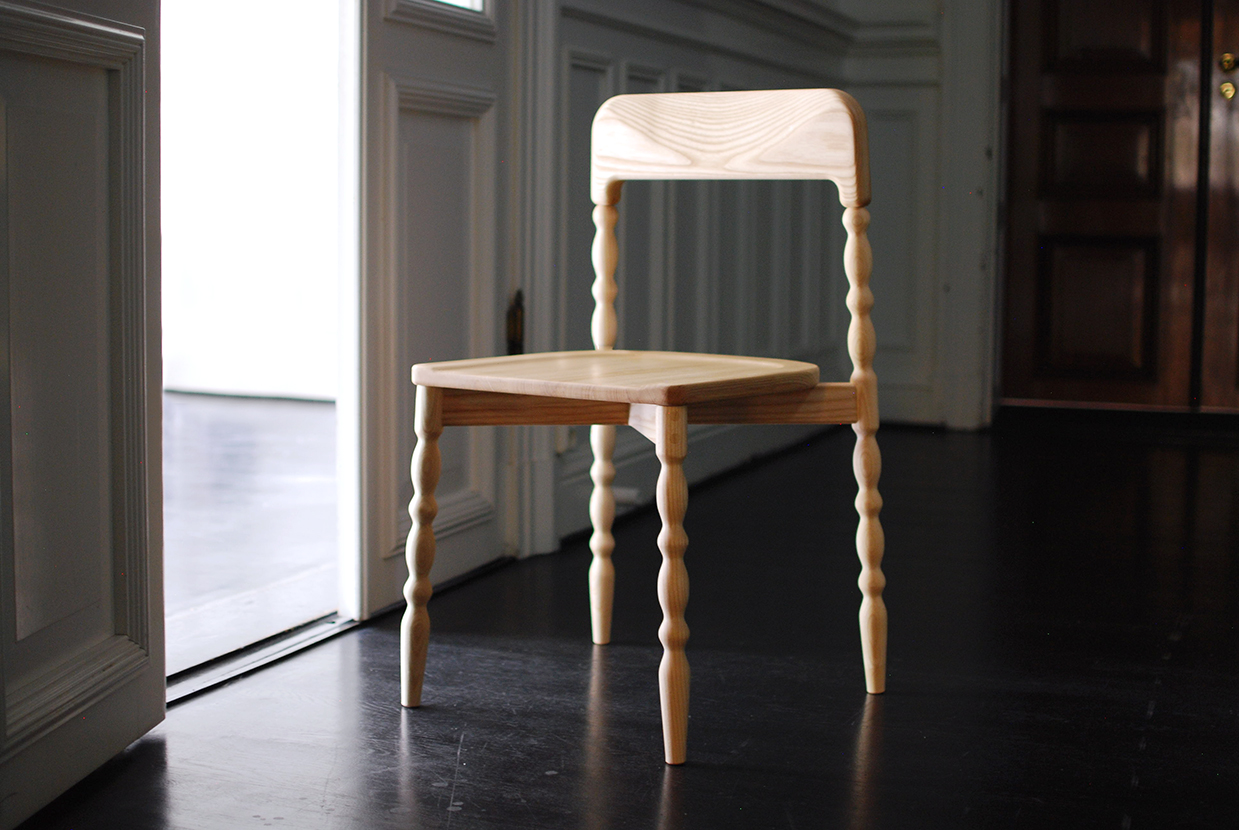
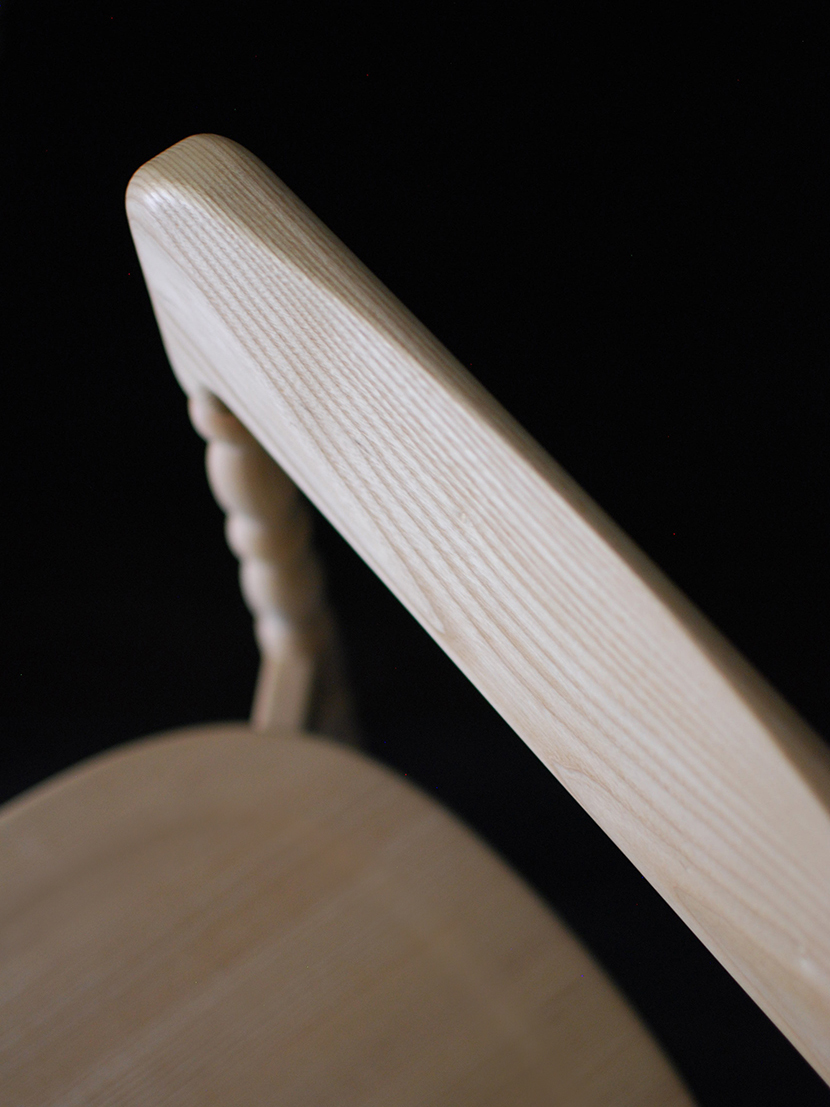
Wild curves hit the tabletop from underneath, creating a piece of living room drama. The legs of a chair, shaped as round beads from soft wood: irresistible not to stroke your hand over. I love to describe my furniture vividly and romantically, just as I like a big part of my design process to be this way. But, being a Scandinavian furniture designer with an Industrial Design degree and educated in functionalist ideals, this is not uncomplicated.
Reclaiming my formal language from minimalism
If I were to describe my creative and aesthetic education, I would say that it consisted roughly of a childhood full of crafts, illustration inspired by children’s books, and my mother’s colourful floral paintings. Later, my teen years were filled with hours of illustration inspired by fantasy and a growing interest in historical styles.
At the age of nineteen, my dream came true when I was accepted to Ingvar Kamprad Design Centrum (Sweden) to study Industrial Design. A new world opened up that I had never come across in the small town that I’m from. I was very impressed by the design world I was encountering, and eager to impress it right back.
Initially, I was true to the aesthetic influences I came from. I tried out some historic hints and added colour, but quite soon I started to wonder if less was actually more, and better.
Historical details in contemporary design
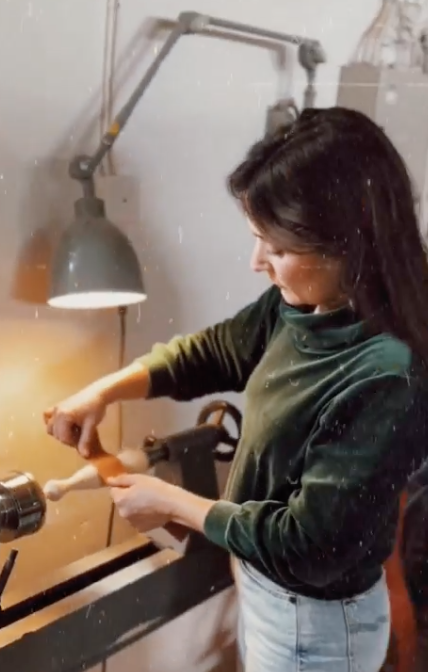
Honest, intelligent and timeless. These are examples of words that I associate with being among the highest ideals within contemporary Scandinavian furniture design. While these words might be important, they do not inspire me. Examples of words that more efficiently spark my creativity are: lust, mysticism and humour, or simply – joy. This is one of the reasons I love folk art.
To me, folk art is punk. It goes straight from the heart out to the hand. In folk art you will find a ruthless style- mix and loads of passion. But you also find great problem-solving, production efficiency and sustainability. So, when pondering about what to focus on for my master’s thesis, I knew folk art was going to be a big part of it. I wanted to see how I could work with historical influences, especially from folk art, in a contemporary way.
My thesis consisted of two parts. In one, I looked at how Scandinavian aesthetics went from expressive folk furniture to minimalistic modernism, and at functional form during specific eras. The second part was a cabinet inspired by folk furniture and my home county, Bohuslän. It was liberating to look back and to home for inspiration, when so much of my BA had been futuristic and global.
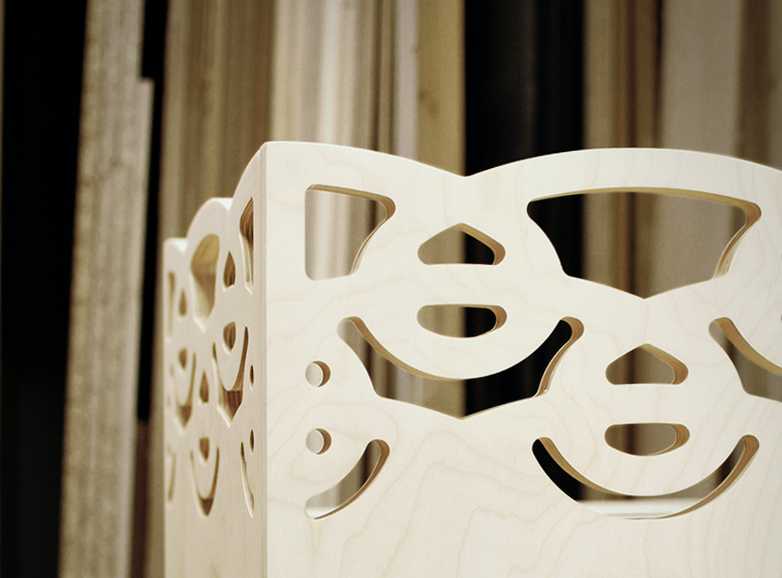
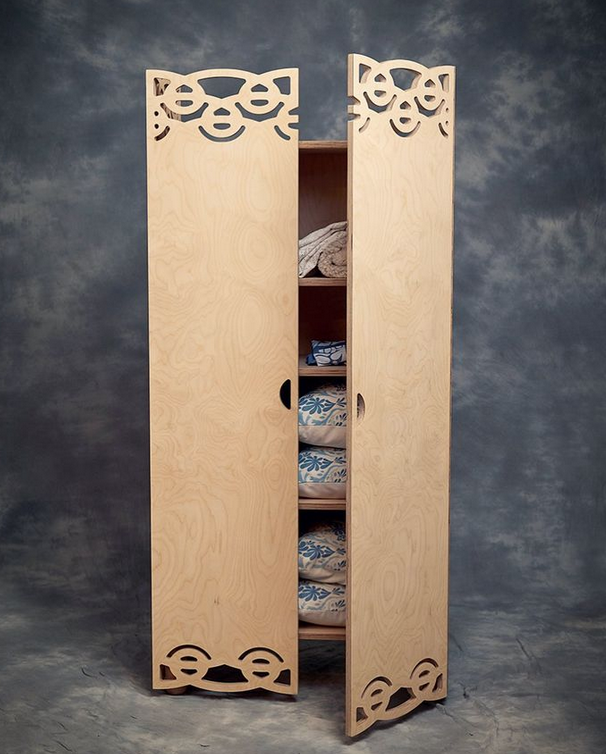
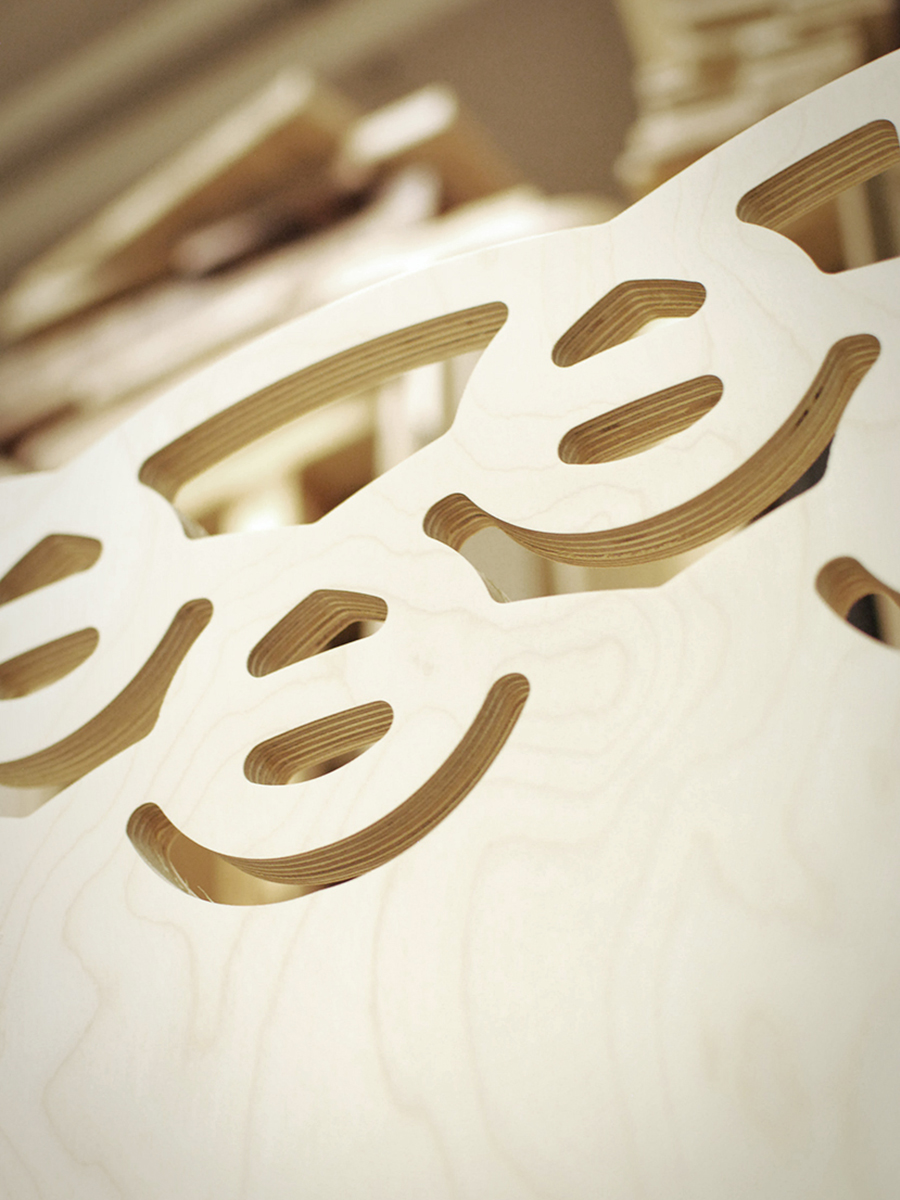
This is inspired by how local carpenters used to simplify carved ornaments into two-dimensional interpretations that were more efficient to produce. This also creates a graphic, modern-looking ornament that interests me. Using a digital production technique to make such a historic ornamental detail intrigues me and has been my focus for the cabinet Texentes. Texentes is launched under my own brand, SLOYDLAB, and is the furniture that I won Young Swedish Design, and my scholarship from IKEA and Swedish Wood, with.
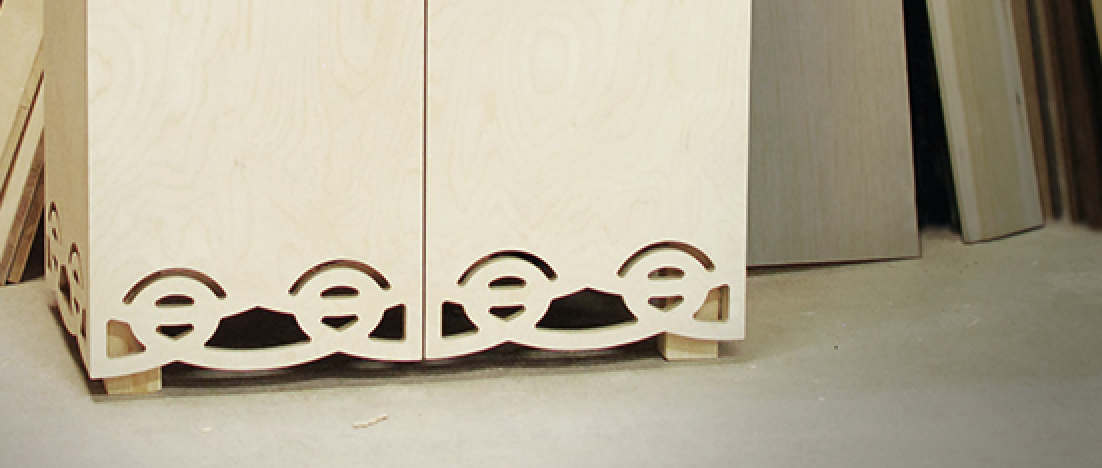
For Texentes, the crown is made by CNC-milling in a perforated ornament from the same piece as the sides and doors of the cabinet. This way, the crown becomes one with the cabinet. The pattern is inspired by loosely woven textiles, giving contrast to the stiff wood. Texentes also has ornamentation at the bottom where the cabinet meets the floor: it almost hides the legs, creating an illusion that the cabinet floats.
What I love so much about the, nowadays rare, detail of cabinet crowns is that they are a symbol of respect, not only to the furniture itself, but also to what the cabinet stores. They stand in stark contrast to those cabinets that are almost camouflaged to the wall, where we might push all our stuff before having guests visit.
Rustic, large crowned cabinets traditionally stored a family’s most precious things, and were actually opened when they had guests. The inside of the cabinet could even be painted in an exclusive colour or patterned – another detail showing respect for one’s belongings.
The cabinet Bohuslän – as well as a new product that I’m currently developing for SLOYDLAB, the cabinet Hortus – have printed patterns on their insides and foldable doors. These foldable doors encourage users to open the cabinets and play with their expression – a practical function there only for aesthetic purpose. A function following form.
The function of ornaments
Visual details, like a pattern that reveals itself on the inside of a cabinet, or simply an ornament in itself, serve an important purpose. The fact that aesthetic elements have an important purpose is obvious, of course, but when talking about special ornaments it seems that it isn’t always this obvious. So, as I conclude this text, I would like to state what drives me to work with ornaments, apart from pure lust.
The purpose of decoration without obvious practical function is that it gives us joy, it inspires us by triggering our fantasy, and it can make us fall for an object. I am not saying that one cannot fall for minimalistic objects, but many people can’t. To do so, many people need ornaments. If our emotions are positively triggered a little extra by an object, the chance that we will have a long-term relationship with that object is greater. The object will not be as easily replaced and we are more likely to fix it if it breaks rather than throwing it away. So, for me, being an ornamentalist is also a sustainable act, and I believe that an inspiring surrounding leads to more inspiring ideas in people.
Further
Hunyadi was awarded the IKEA Scholarship, Young Swedish Design in 2022. See the award interview with Hunyadi here. Her work was part of the Young Swedish Design exhibition showcased at the Helsingborg 22 Expo.
The Texentes cabinet was developed in collaboration with TSENTER (Centre of Competence for Wood Processing and Furniture), an Estonian wood technology hub within the Võru County Vocational Training Centre as part of an EU Nordic collaboration programme.
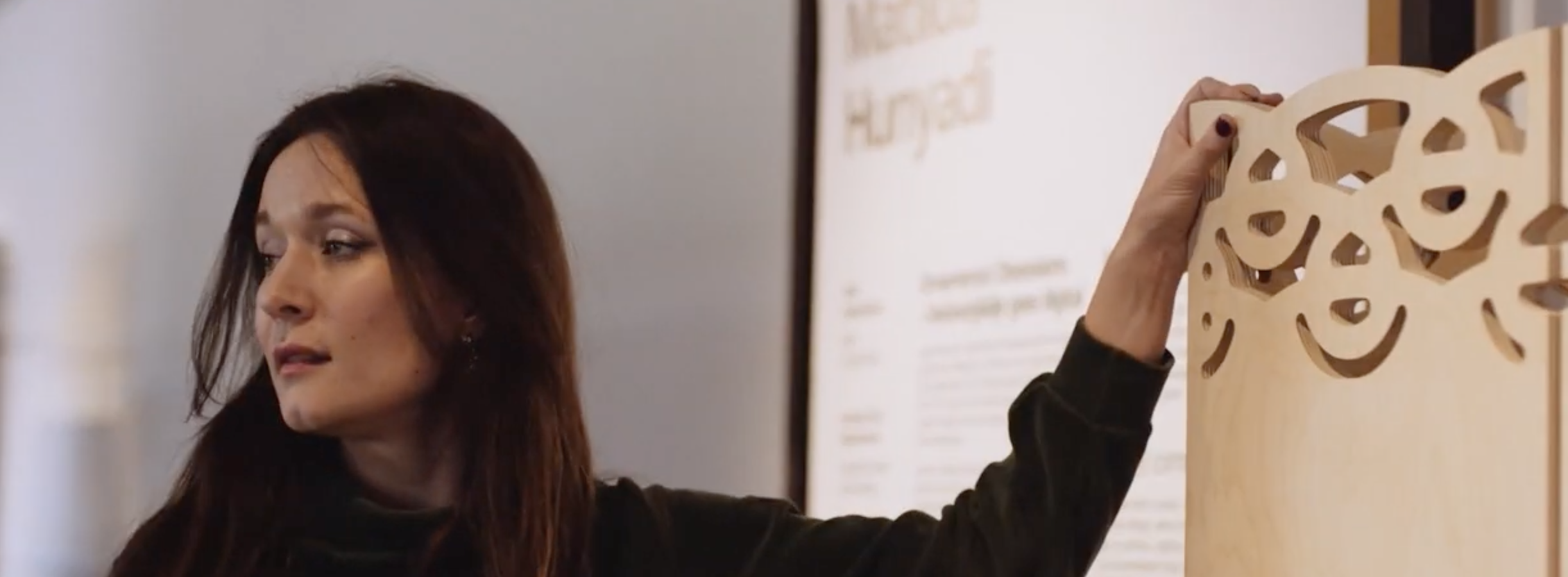
Interview video screengrab