
Emma Jurczynski – Tree-House
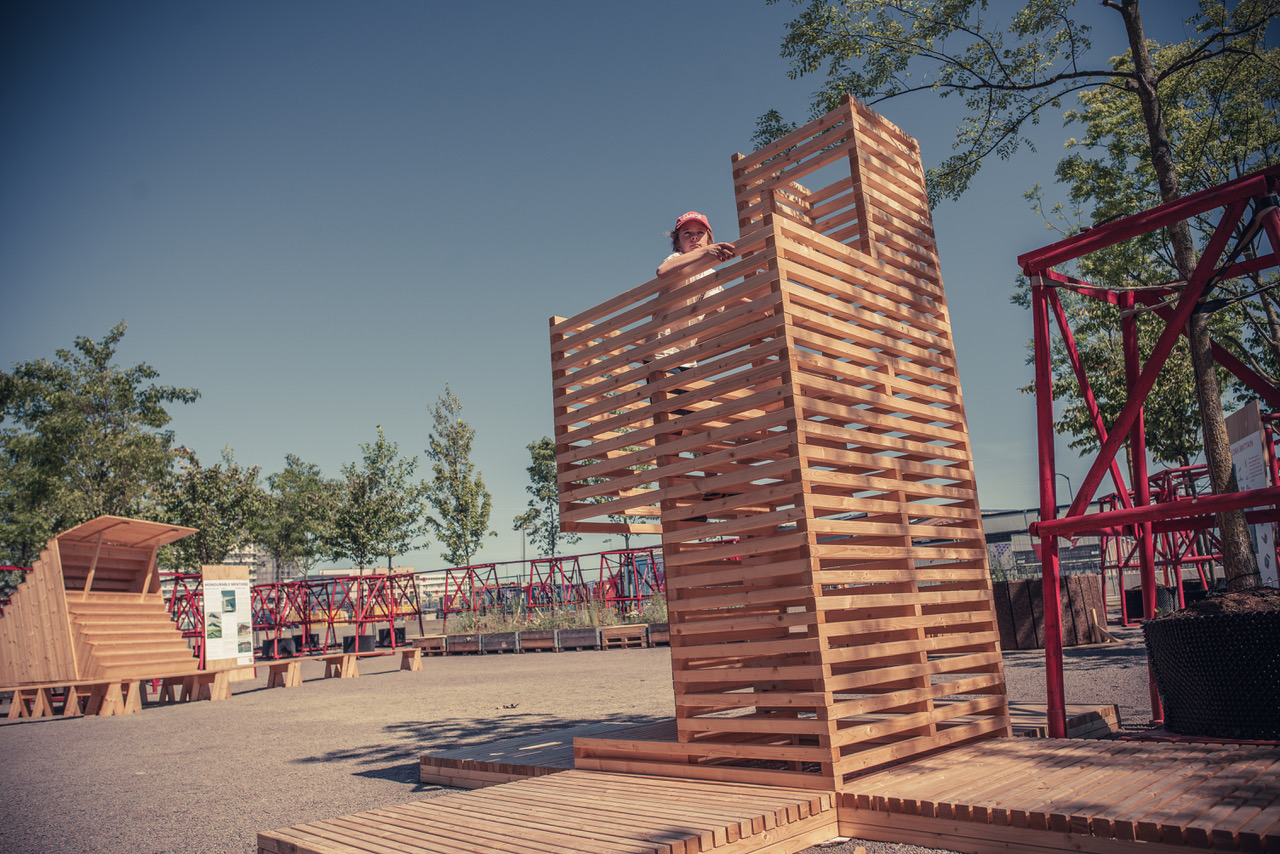
This proposal reconsiders the idea of a treehouse – of building with nature, in nature. Inspired by a childhood dream for a treehouse, the playful structure constructs a new relationship with the forest by elevating the inhabitant into the canopy. The typology creates a feeling of refuge, a place for imagination, and a home for memories. However, unlike a traditional treehouse, the stand-alone structure does not depend on being fastened to trees, instead, it can be constructed anywhere, in any context.
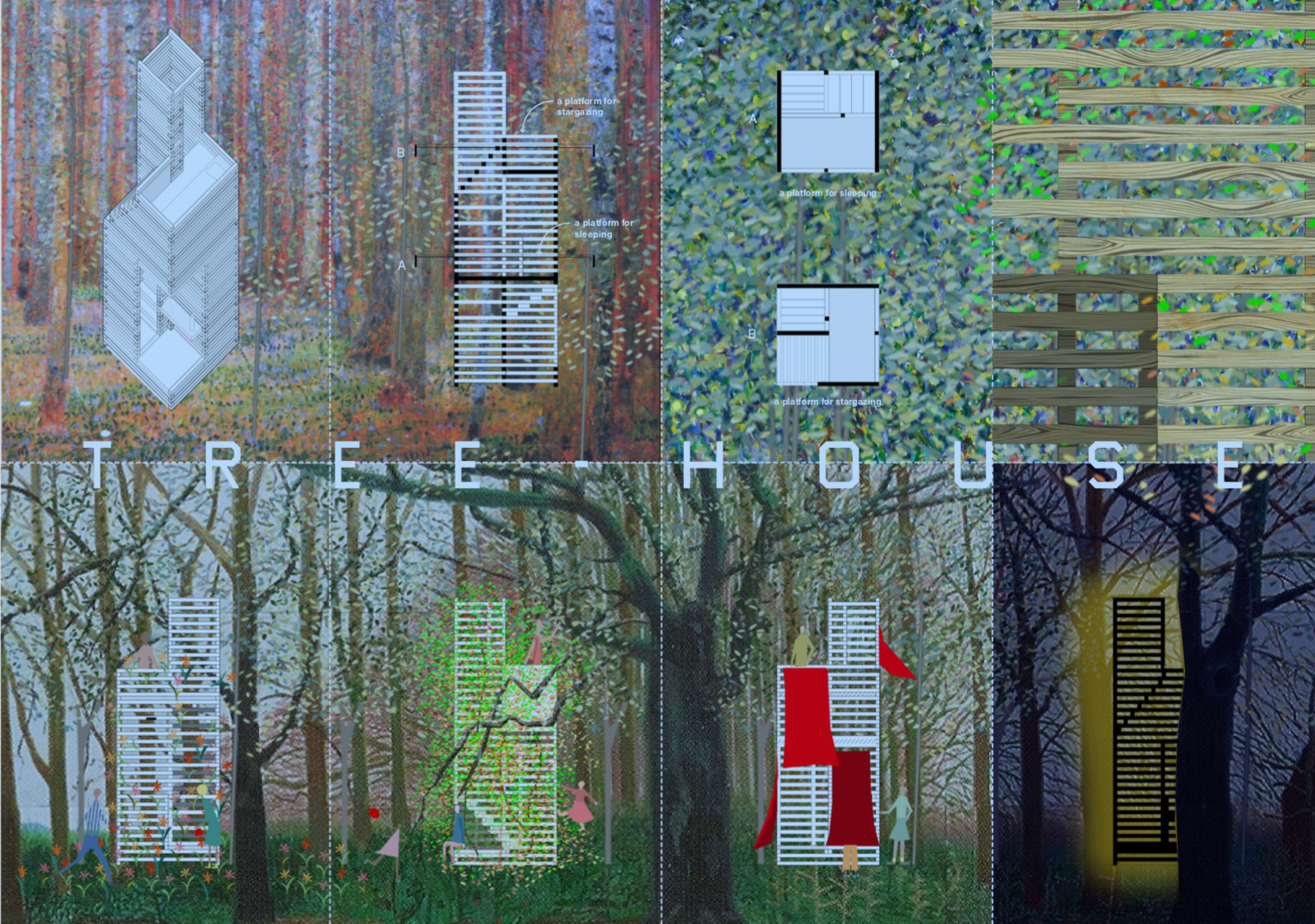
Tree-House can be inhabited in various ways and adapted to the specific needs of the inhabitants. The porous structural system, which consists of stacked 4 x 4-inch timber, allows the landscape to infiltrate into the interior. Vines can be interlaced through the structure, creating a living building. Fabric can be woven between the horizontal members when a little more privacy is called for. Additional elements and furniture pieces (constructed with the same system) can be slotted into the openings in the structure, allowing the usable space to expand and contract in service of the social and physical context. It is both a home for nature and a place to be at home in nature. With this versatility, the architecture has the capacity to adapt to the natural changes in life, keeping both structure and materials in use.
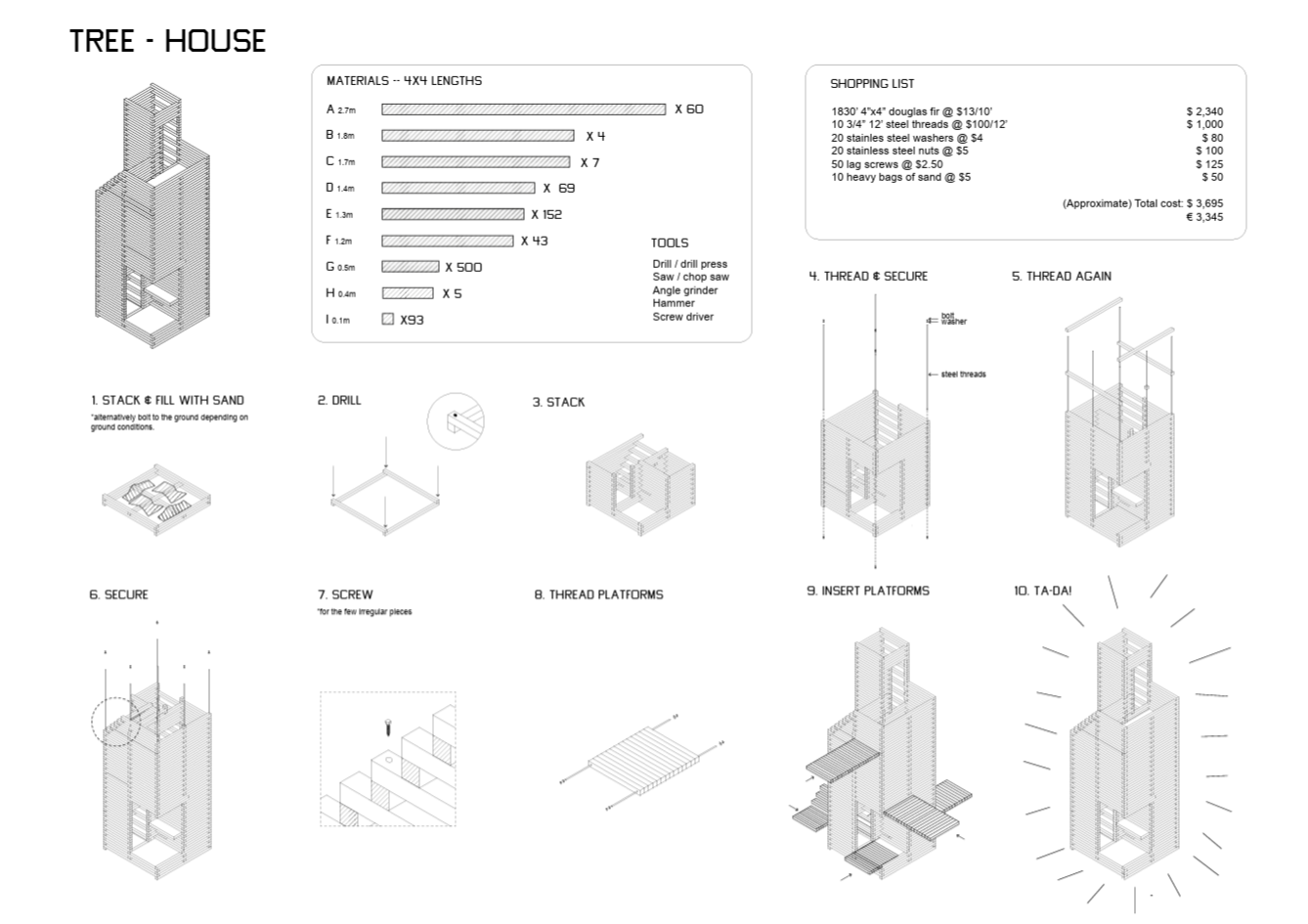
The design for Tree-House began at the joint: two timber members are stacked and threaded with a metal rod. The ambition of the project was to push the limits of what a single joint can do. In this case, the entire structure is built with a single joinery method, where the joint acts both structurally and spatially. It demonstrates how a simple detail can create complexity in space. By establishing a simple construction system, the shelter does not require specialised training to assemble it, and the person(s) putting it together have the freedom to reconfigure members, creating alternative and personalised forms and spaces. The intentional use of standardised wood allows materials to be reused in future constructions when the structure is no longer in use.
Further
Emma Jurczynski – emma.jurczynski@gmail.com