
Otis Harley – The Cork Loop
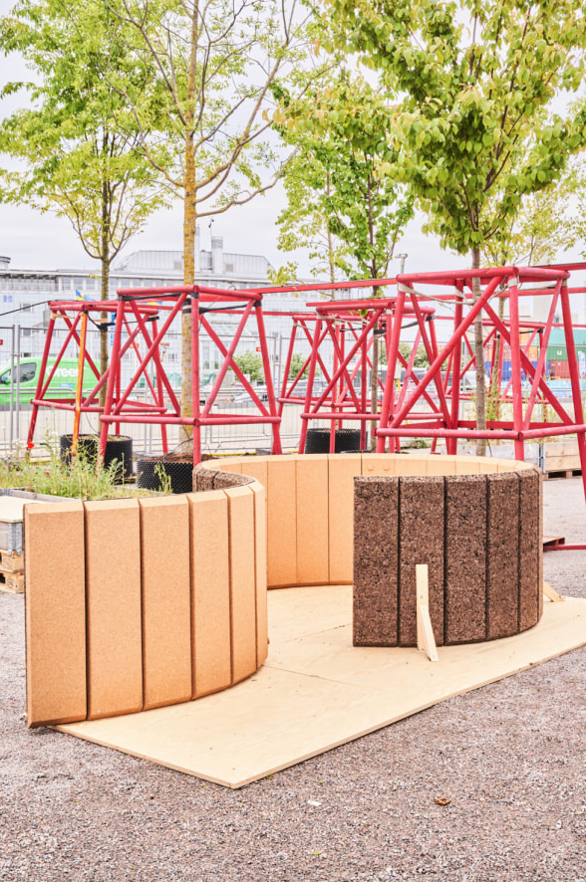
The design of the Cork Loop is inspired by trips I made as a child with my family to the cork forests of Alentejo, Portugal. Known locally as the Montados de Sobro, I later understood the enchanting natural beauty of the cork forests to be a model of how industry can work in harmony with nature. When sustainably managed, a single cork oak tree can live up to two hundred years, and the bark can be harvested over sixteen times. The forests also protect against soil erosion and provide protection against forest fires due to cork’s reduced combustibility. The cork forests are a sanctuary of biodiversity and provide habitat for around 130 species of plants and 150 species of animals.
An adaptable dwelling to connect with nature
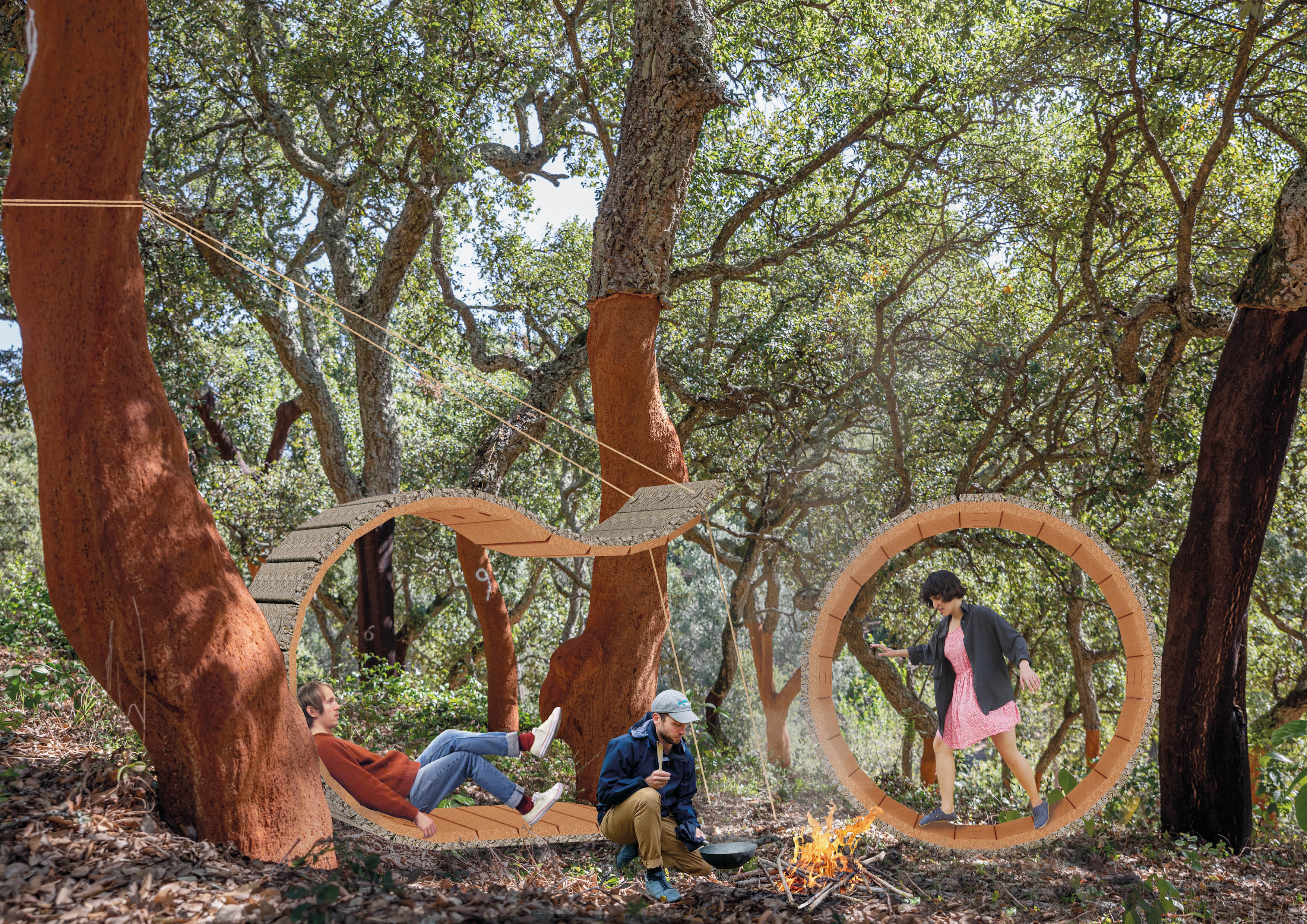
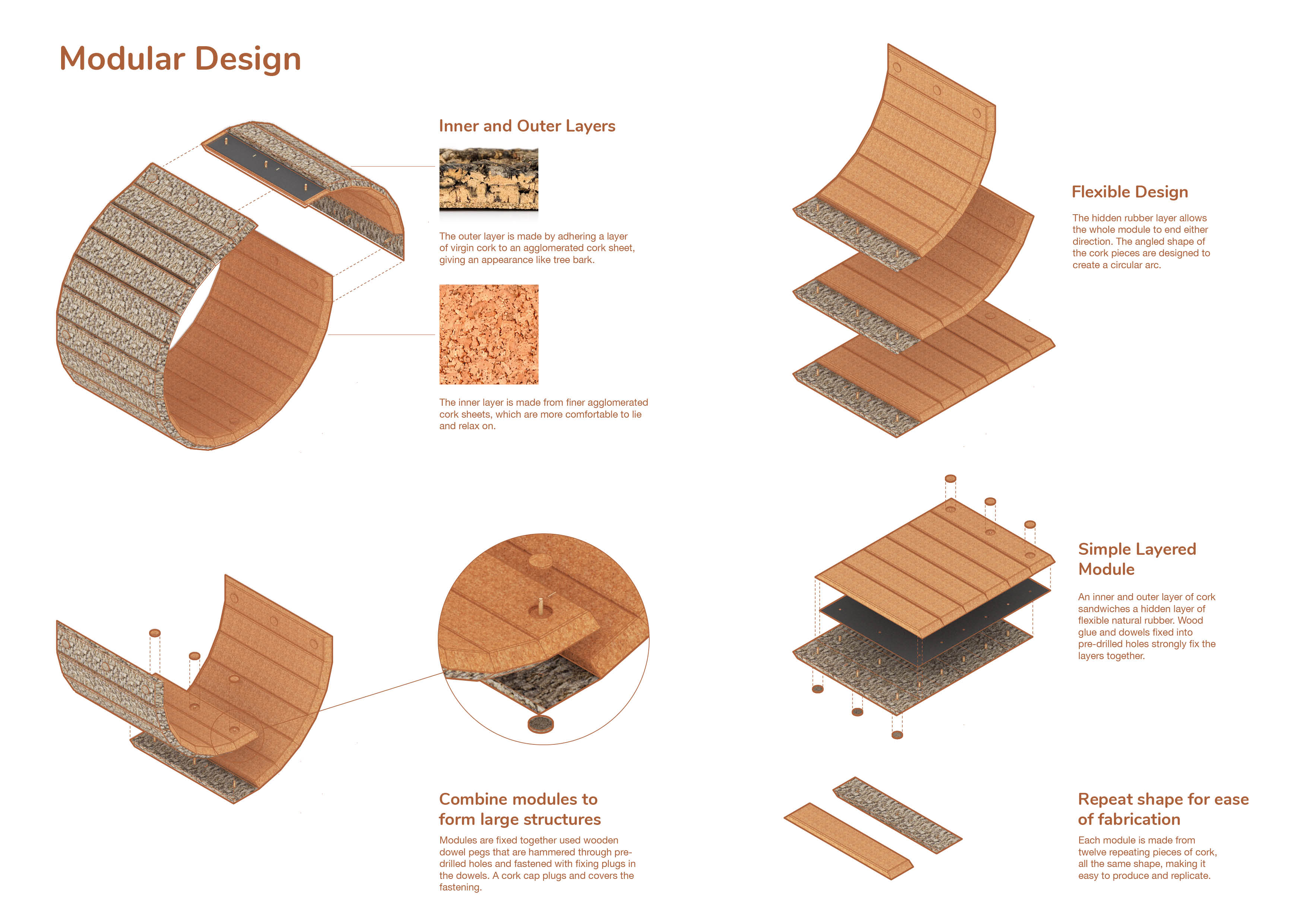
The Cork Loop inspires people of all ages to explore and connect with the extraordinary natural environments that surround us through an adaptable modular shelter, and to reflect upon how humans can create industries that protect the ecosystems which sustain them. The bark-like outer layer of raw cork contrasts the softer inner cork layer as if the structure was peeled from the trees that surround it. A hidden natural rubber layer allows each module to be bent into different shapes. The compact and lightweight modular design makes the Cork Loop simple to transport and set up, opening up the possibilities for exploration. Modules can be combined in countless ways to form different structures which adapt to their environment. Four modules can be combined to form a ring structure to walk through the forest, or to make a raft to float on the water.
“Dwelling is not primarily inhabiting but taking care of and creating that space within which something comes into its own and flourishes.” — Martin Heidegger
In the warm dry climate of the Montados de Sobro, the best shelter to enjoy nature is perhaps the simplest: a roof to protect from sun and light showers, and a structure to lift the user off the cool ground. The Cork Loop uses cork’s waterproof and insulating properties to offer cover and warmth while allowing people to enjoy cool breezes and the natural surroundings. When it’s time to leave the forest, the Cork Loop can be dismantled for reuse, leaving no trace on the environment.
Sustainable and affordable production
All materials which make up the Cork Loop are derived from trees and therefore lock in carbon as they grow. No artificial binders are used in the cork as the granules are steam-heated, which causes them to expand and release Suberin, a natural binder, which fixes the granules together. One day the cork will biodegrade back into the soil, or can be ground up and recycled into other cork products. The natural rubber layer is made from the sap of the rubber tree, and the dowel fixings are made from sustainably-sourced timber. The open-source design is made from readily available and affordable materials, using simple and cost-effective fabrication methods available locally in public workshops, Fablabs or Makerspaces. Purchasing cork material helps to support the cork industry in Portugal, which employs more than 9,000 people, and helps to ensure these unique habitats and environments are protected for future generations.